How CAT6A Cabling Supports High-Bandwidth Business Applications
A fast internet circuit does not guarantee a fast business network. I have seen offices pay for premium fiber, install new firewalls, upgrade wireless access points, and still struggle with lag, packet loss, dropped calls, and slow file transfers. More often than many teams expect, the limiting factor is the physical layer. If the cabling behind the walls and above the ceiling cannot carry modern traffic reliably, every expensive device connected to it is forced to work around that weakness.
That is where CAT6A cabling earns its place. For businesses that rely on large data transfers, high-density Wi-Fi, IP cameras, unified communications, cloud applications, and growing power demands over Ethernet, CAT6A cabling gives the network room to breathe. It is not the cheapest option in a network cabling installation, and it is not necessary in every single setting, but for many commercial environments it solves problems before they show up on the help desk queue.
The value of CAT6A becomes clearer when you look past the label on the cable box and focus on what businesses are actually trying to run across their structured cabling systems.
Bandwidth demand has changed faster than many buildings have
A decade ago, many offices could get by with modest ethernet cabling. Typical workstation traffic was lighter, wireless access points served fewer devices, and cameras did not stream high-resolution video around the clock. Today, a single floor may carry video conferencing, cloud backups, VoIP, door access control, security footage, virtual desktops, and guest Wi-Fi at the same time. Add a handful of creative users moving large design files or a conference room with a modern collaboration system, and the network begins to look very different from what the original office network cabling was designed to support.
This matters because horizontal cabling tends to outlast switches, access points, and firewalls by a wide margin. Active equipment might be replaced every five to seven years, sometimes sooner. Data cabling often stays in place for ten to fifteen years, and in some buildings much longer than that. When a business chooses cabling, it is not really making a decision for this quarter. It is making a decision for the useful life of the workspace.
CAT6A cabling was developed to support 10 Gigabit Ethernet over the full standard channel length of 100 meters. That full-length support is one of the reasons it stands apart from standard CAT6 cabling. In real-world business network installation projects, channel length, patching, and environmental interference matter. Theoretical performance on a spec sheet means very little if the installed links do not perform consistently after contractors leave and employees fill the space.
Why CAT6A is different from CAT6 in practice
The comparison between CAT6 cabling and CAT6A cabling often gets reduced to a simple phrase: CAT6A supports 10G. That is true, but incomplete.
CAT6 can support 10 Gigabit Ethernet, though usually only over shorter distances, often up to 55 meters depending on alien crosstalk and installation conditions. In a compact office with short runs and low electromagnetic noise, that might be enough. I have seen CAT6 work perfectly well in smaller suites where the telecom room sat almost in the middle of the floor and cable routes were clean and short.
The trouble appears when layouts are less forgiving. Long runs through open ceilings, dense cable bundles, nearby electrical infrastructure, or future moves and adds can turn a marginal design into a recurring support issue. CAT6A was built with tighter performance in mind, especially around alien crosstalk, which is interference from adjacent cables. In a high-density environment, that extra margin matters.
CAT6A also tends to be more robust for Power over Ethernet applications that place greater thermal demands on cable bundles. As businesses deploy more PoE devices, including pan-tilt-zoom cameras, multi-radio wireless access points, VoIP phones, digital displays, and access control hardware, low voltage cabling is doing more than simply passing data. It is also delivering useful power. That combination raises the stakes for cable quality and installation discipline.
High-bandwidth applications expose weak cabling fast
The office applications that stress a network are not always dramatic. Sometimes they are mundane, but relentless.
A company with 150 employees may run cloud-based productivity tools, but local traffic still remains heavy. Wireless access points backhaul every laptop, tablet, and phone session to the switch. Security cameras record continuously. Teams sync files all day. Conference rooms host back-to-back video meetings, often in high definition. IT departments push software images and updates after hours. None of those workloads sound exotic on their own. Together, they fill links quickly.
Consider a modern wireless deployment. A Wi-Fi 6 or Wi-Fi 6E access point can aggregate significant traffic, especially in dense user environments like conference centers, healthcare facilities, schools, or open-plan offices. If the access point uplink is constrained by older data cabling, the wireless upgrade never reaches its real potential. I have seen organizations blame access point vendors for underperformance when the real bottleneck was the copper link feeding the ceiling device.
Video surveillance creates a similar pattern. A handful of cameras is easy. Dozens or hundreds of high-resolution cameras, some with advanced analytics, place steady demand on switching and cabling. If those links also carry PoE, cable performance under heat and bundle density becomes more relevant. That is one reason experienced network cabling teams pay close attention to routing, fill ratios, and termination quality rather than treating cabling as a commodity purchase.
Unified communications is another area where the physical layer gets tested. Voice and video are unforgiving of latency, retransmissions, and intermittent errors. A damaged pair or poorly terminated jack may not stop a user from checking email, but it can create choppy audio, frozen video, or random call drops that are hard to pin down. The higher the application sensitivity, the more valuable a stable structured cabling foundation becomes.
The business case is usually about longevity, not hype
When clients ask whether CAT6A is worth the extra cost, the answer depends less on cable price per box and more on the total cost of the facility over time.
Labor usually outweighs material in commercial network cabling installation. Once ceilings are opened, pathways are accessed, crews are scheduled, and users are coordinated around, the difference between installing CAT6 and CAT6A may be meaningful, but it is rarely the whole story. If a business expects to stay in the space for years, support dense Wi-Fi, or move toward more 10-gig uplinks and PoE-powered devices, spending more up front can be cheaper than revisiting the cabling later.
The hidden expense of underbuilding is disruption. Recabling an occupied office is rarely clean or convenient. It means night work, access coordination, furniture moves, dust control, patch panel changes, testing, and downtime planning. For healthcare, finance, legal, and other high-availability settings, those interruptions cost real money. That is why many experienced designers look at CAT6A as infrastructure insurance rather than luxury.
There are also image and productivity costs. Employees may not know whether they are connected over CAT5e, CAT6 cabling, or CAT6A cabling, but they notice when conference room video stutters or large files crawl between systems. Clients notice too. Reliable infrastructure tends to disappear into the background, which is exactly what good infrastructure should do.

Where CAT6A makes the most sense
Not every site needs CAT6A across every drop. Judgment matters. A small office with ten staff, a single internet circuit, light cloud usage, and no local servers may be perfectly well served by CAT6 in short-run conditions. On the other hand, some environments benefit from CAT6A almost immediately.
The strongest candidates usually include the following:
- offices planning for 10 gigabit switching at the edge or in key work areas
- high-density wireless deployments using newer access points with multi-gig uplinks
- buildings with extensive PoE devices such as cameras, access control, and digital signage
- sites where cable runs approach maximum channel distances
- businesses that expect to remain in the space long enough to benefit from future-ready structured cabling
I would add one more category that is easy to overlook: businesses with uncertain growth. If the company cannot clearly predict how much traffic it will carry in three to five years, a more capable cabling plant often provides useful flexibility. Growing firms tend to add systems gradually, not all at once. One year it is a few more cameras. The next it is a warehouse scanner network, upgraded Wi-Fi, and a new cloud backup workflow. Cabling that looked generous at move-in can feel cramped surprisingly fast.
Installation quality determines whether the spec means anything
A lot of disappointment with cabling comes from treating standards compliance like a label rather than a process. You can buy CAT6A components and still end up with a poor-performing channel if the installation is careless.
Bend radius, pair untwist at termination, pathway congestion, support methods, separation from power, grounding practices where applicable, and testing discipline all affect results. A rushed installer can ruin expensive cable with small mistakes repeated hundreds of times. I have seen links fail certification because someone cinched bundles too tightly with zip ties, crushed cable above ceiling grids, or ignored fill limits in pathways. On paper, everything was CAT6A. In practice, the system was compromised before the users even moved in.
That is why business network installation should involve more than just pulling cable and punching down jacks. A professional network cabling contractor should design pathways sensibly, label consistently, test every run, and provide documentation that is actually useful after turnover. Certification reports matter, especially on larger jobs, because they verify that the installed channel meets performance requirements.
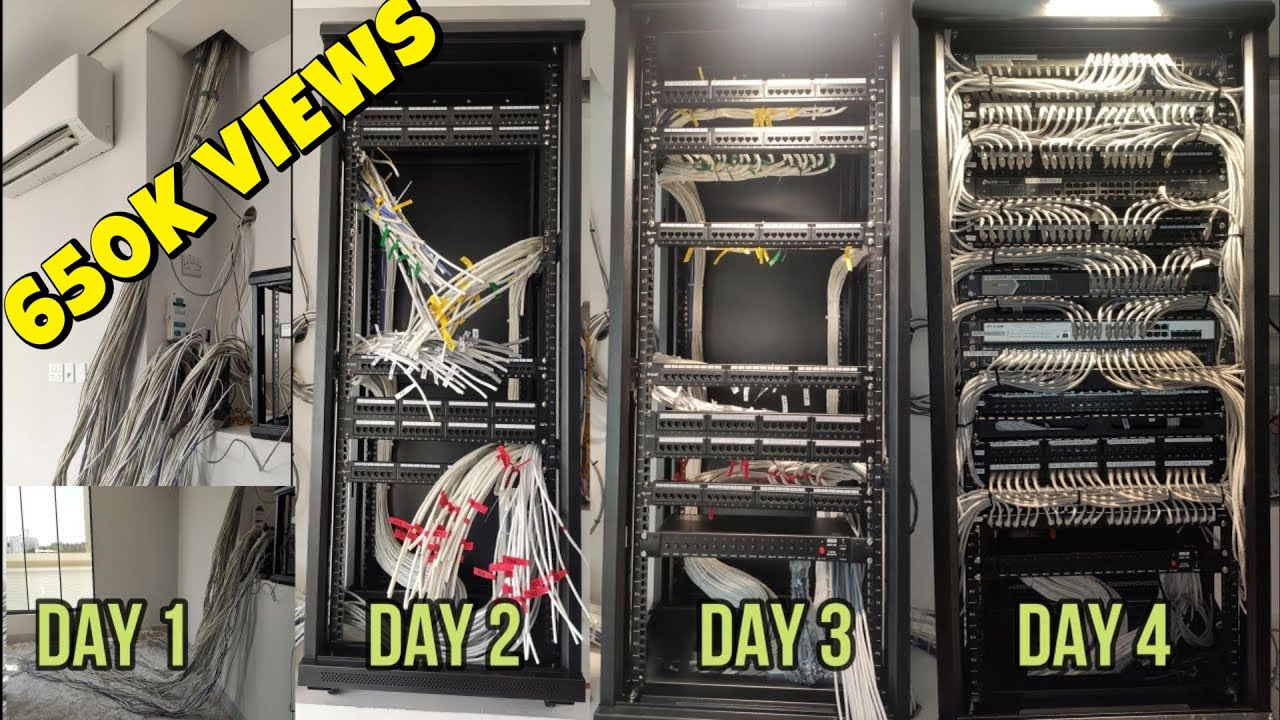
Good office network cabling also accounts for serviceability. Patch panels should be organized so future moves, adds, and changes do not become guesswork. Cable managers should leave enough room for maintenance without turning the telecom rack into a knot of patch cords. These details do not show up in marketing brochures, but they strongly influence how long the cabling plant remains reliable.
PoE changes the conversation more than many buyers realize
Power over Ethernet has quietly transformed low voltage cabling from a simple transport medium into part of the building power strategy. That shift is one of the strongest practical reasons to take CAT6A seriously.
Older assumptions were built around phones and occasional wireless access points. Today, PoE may support surveillance cameras with heaters, advanced access points, card readers, mini switches, occupancy sensors, and specialty devices. As power levels increase, cable temperature and bundle design become more important. Excess heat can affect performance, especially in tightly packed pathways or warm ceiling spaces.
CAT6A is not magic, but it gives designers better margin when supporting higher-performance and higher-power applications. In a warehouse with long cable runs and clusters of PoE cameras, or in a modern office with dense AP placement and always-on conferencing gear, that margin can reduce headaches later. It also helps when the building owner wants one unified low voltage cabling approach rather than a patchwork of different media and standards.
What decision-makers should ask before approving a cabling scope
The right cabling choice starts with honest questions about the business, not brand preference. Before signing off on a network cabling project, it helps to pin down a few practical issues:
- how long the business expects to stay in the space
- whether 10 gigabit connectivity is likely during the life of the cabling
- how many PoE devices are planned now and in the near future
- whether wireless density is increasing
- how disruptive a future recabling project would be to operations
These questions sound simple, but they force the discussion away from first-cost thinking and toward lifecycle thinking. If the answers point to growth, density, longer distances, or heavy PoE use, CAT6A usually becomes easier to justify.
Trade-offs that deserve a candid discussion
CAT6A is not a universal answer, and experienced designers should say that plainly. It is thicker and less flexible than some lower-category cable, which can affect pathway planning and rack management. Termination can be a little more demanding. Material costs are higher. In cramped retrofits, especially older buildings with limited conduit space, these factors can be significant.
There are also cases where fiber should enter the conversation. For backbone links between telecom rooms, inter-floor distribution, longer distances, or environments with https://rentry.co/btywqypi high electromagnetic interference, fiber may be the better choice regardless of the horizontal copper category. Good structured cabling design is not about forcing every link into the same media type. It is about matching medium to purpose.
Even within copper, selective deployment sometimes makes the most sense. I have worked on projects where CAT6A was installed to wireless access points, conference rooms, production areas, and key user groups, while standard CAT6 cabling was used for lighter-demand desktop locations with short runs. That kind of mixed approach can balance performance and budget without compromising the parts of the network that carry the heaviest load.
The key is to avoid false economy. Saving a modest percentage on cable while limiting the performance of the entire office network cabling system is rarely a strong business decision. If the cabling will support revenue-generating operations, customer-facing services, or critical internal workflows, reliability should carry real weight in the budget.
What a well-planned CAT6A system looks like after move-in
The best sign of a successful CAT6A deployment is that nobody talks about it much after occupancy. Access points come online at full speed. Cameras stay stable. Video calls remain smooth. Users move desks without mystery outages. IT can add devices without wondering which runs are marginal. Patch panels are labeled clearly enough that a technician can make changes without tracing cables by hand for half an hour.
That quiet reliability is the product of several choices made early. The cable category was appropriate for the application profile. The network cabling installation respected pathway limits and performance rules. The structured cabling documentation was complete. Testing was thorough. And the business did not treat data cabling like an afterthought.
When those pieces come together, CAT6A supports far more than headline bandwidth numbers. It supports operational confidence. It gives the network room to absorb growth, denser wireless, more power-hungry edge devices, and the steady layering of new applications that defines modern business IT. For companies that depend on always-on connectivity, that is not a luxury. It is the baseline for a network that will still make sense years after the paint dries and the move boxes are gone.
Fontana Tech Pros provides professional network cabling installation, structured cabling, fiber optic installation, commercial WiFi, access control, security camera installation, alarm systems, and phone system solutions for businesses throughout Southern California. Learn more at https://fontanatechpros.com/.
Fontana Tech Pros specializes in reliable network cabling solutions for commercial offices, warehouses, schools, and industrial facilities. Our experienced team delivers high-quality structured cabling and low-voltage installations designed for long-term performance.